When a parent or grandparent chooses to remain in their own home it creates a strong emotional bond between independence and comfort. At the same time family caregivers often worry about what could happen if an emergency occurs when no one else is around. Panic alarms offer a direct way to lower response times and connect older adults to help fast. This article walks through practical reasons to consider these devices and how they fit into a home safety plan.
Panic alarms range from wearable buttons to systems with automatic fall detection. They are not just gadgets. They change how an emergency unfolds by speeding access to help and making daily living safer for people who have mobility limits, chronic conditions, or cognitive challenges. Below are clear explanations, examples, and tips that families can use to pick the right option and get it working well at home.
How panic alarms reduce risk for elderly people at home
One of the main advantages of panic alarms is that they cut the time between an incident and a response. In many emergencies the difference between a mild outcome and a severe outcome depends on minutes. A well placed alarm lets an older person call for help from a fall, sudden illness, or an unsafe situation without needing to reach a phone or leave a room.
In addition to faster contact with emergency services a panic alarm can link to a monitoring center or trusted contacts. That connection means trained staff or a family member can triage the scene, decide whether to call 911, and guide first responders to the home. This layered response reduces confusion and removes some of the burden on the individual who may be frightened or disoriented.
Common types of panic alarms and how they work
Panic alarms come in several formats that fit different lifestyles. Choosing a style depends on daily routines and physical needs. Below are common categories and what each one does.
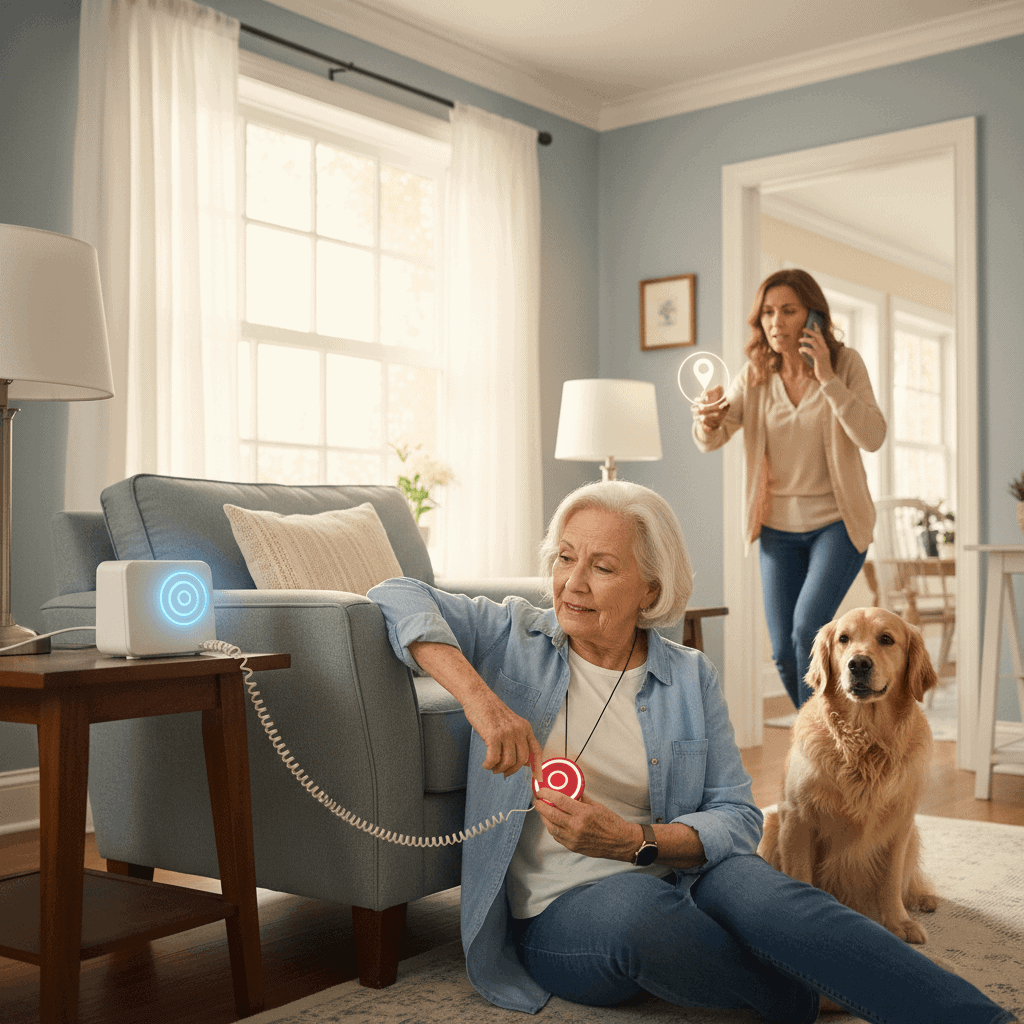
- Wearable pendants Small buttons worn on a neck chain or wrist band. Pressing the button triggers a call for help.
- Home base units Stationary consoles plug into the phone line or internet and pair with a wearable button. They are useful for people who spend a lot of time at home.
- Mobile GPS units Small devices that combine a panic button with location tracking. These are helpful for older adults who still drive or walk outside alone.
- Smartphone apps Applications that mimic panic button functions and can share location data. Best when the user is comfortable with a phone.
- Automatic fall detectors Devices that sense sudden movements and call for help even if the wearer cannot press a button. These can reduce the time someone lies on the floor following a fall.
Quicker help with local responders and family networks
Panic alarms do more than contact 911. Many systems can alert a list of emergency contacts in seconds. That feature is useful when a family member lives close by and can reach the home faster than an ambulance. In the event of a non life threatening situation a neighbor or relative can check in first and provide immediate support.
Some systems provide two way communication so the person in distress can speak to a monitoring agent. That interaction calms nerves and gives clear instructions while help is on the way. For families who live at a distance these updates reduce anxiety and clarify whether travel to the home is necessary.
Fall detection features explained
Falls are a leading cause of injury among older adults. Devices with fall detection change how these incidents are handled by calling for help when a hard impact occurs and the wearer is unresponsive. While detection is not perfect it adds a layer of security for people at higher risk.
How fall sensors detect a problem
Most fall sensors use motion and position data to decide if a sudden event meets a threshold. If an impact is registered the device sends an alert to the monitoring center. Some systems include a short delay that allows the wearer to cancel a false alarm if they are okay.
Limitations and realistic expectations
Fall detection can miss certain low impact incidents and may produce false alarms during vigorous activity. It should be viewed as one tool among many. Pairing a fall detector with a wearable button and a clear emergency plan gives the best balance between vigilance and practicality.
Selecting the right alarm for your situation
Match a device to daily patterns and medical needs. Consider whether the person spends most time indoors or is often outside. If memory loss is present choose a device that requires minimal steps to activate. For someone who is active choose a unit that is water resistant and has a secure clasp.
Budget also matters. Some services charge a monthly fee for monitoring while others are one time purchases. When comparing options check battery life, range, and how the system contacts help. Read user reviews for reliability notes and look for local companies that can install and service systems in person.
For a clear run down of benefits and common features consult a dedicated overview that lists what to expect from different models view details and include questions you want answered when you call providers.
Installation maintenance and simple tests to keep a system ready
Proper setup matters. Place base units near the center of the home to maximize signal reach. Teach the user and nearby helpers how to operate the device and run a call test with the monitoring center so everyone knows the protocol. Mark batteries on the calendar and set reminders to swap them well before they run low.
- Test alarms monthly and after power outages
- Confirm contact lists are current with local numbers
- Practice a scenario so the person using the alarm knows what to expect
- Keep the wearable on a lanyard or wrist band that is comfortable and hard to lose
Everyday tips for integrating panic alarms into care routines
Start small when introducing a panic alarm to an older adult. Explain the purpose clearly and share examples of when they might press the button. If they are resistant focus on the benefit of staying independent at home while still having quick access to help. This approach often reduces stigma and makes acceptance easier.
Place the device in spots that fit daily habits. A pendant worn at all times is best for people with mobility concerns. For others, a bedside unit and a wrist band may be a better match. Regularly revisit the plan and adjust settings after medical changes such as new medications that affect balance or alertness.
Legal and privacy considerations
When a system includes location tracking or a monitoring service families should review the privacy policy and ask how data is stored and shared. Some services keep audio recordings of conversations with monitoring staff. Ask whether those recordings are saved and who can access them. Understanding these details helps protect personal information while using the device.
If emergency contacts include paid caregivers confirm authorization levels. Clear written permission helps avoid confusion and keeps responsibility transparent if a response is delayed or a false alarm occurs.
In summary panic alarms are a practical step to reduce risks that older adults face when living at home. By cutting response times and linking the person in need to trained help or nearby family, these systems close a gap that household phones and neighbors alone cannot fill. Choosing the right device means balancing cost, coverage, and ease of use. Simple maintenance and scheduled tests keep the system reliable.
Take action today by listing daily routines and possible emergency scenarios for the person you care about. Use that list to compare a few models, read user reports, and speak directly with providers about response times and monitoring fees. If possible trial a unit to see how it fits daily life. A well matched alarm can be the difference between a long delay and a quick, calm response. Make a plan, test it, and involve the whole care circle so each person knows their role when the button is pressed. This small investment in a safety measure has clear, measurable benefits for comfort and security at home.